Showing posts with label haute couture. Show all posts

SPOTLIGHT: PETALS & PASSIONS - Love Through the Blossoms

How Heian-Era Flower Motifs are Reorganizing Modern Haute Couture

The Heian period (794–1185 AD) stands as the pinnacle of Japanese classical culture, defined by a courtly refinement known as miyabi (elegance). Today, contemporary designers are looking back to this golden age, resurrecting its sophisticated floral motifs to breathe poetic romance into modern silhouettes.

The Big Three: Cherry, Wisteria, and Paulownia

Sakura (Cherry Blossom): In the Heian court, the cherry blossom eclipsed the plum as the ultimate symbol of transience and beauty. Unlike the graphic prints of modern fast fashion, Heian-style cherry blossoms are rendered as delicate, scattered petals. Modern applications use sheer silk overlays and soft pink gradients to mimic the falling snow effect of the blossoms, perfect for ethereal spring collections.

Fuji (Wisteria): Associated with the powerful Fujiwara clan, wisteria represents nobility and grace. Its cascading purple clusters naturally lend themselves to vertical embroidery down the spine of jackets or flowing down the lengths of evening gowns. The sway of wisteria motifs captures the fluid motion prized in ancient courtly dances.

Kiri (Paulownia): A sacred motif historically reserved for royalty, the paulownia features structured leaves and upright flowers. In contemporary fashion, this motif is translated into metallic brocades, structured blazers, and statement jewelry, offering a sharp, imperial contrast to softer floral trends.

Kasane no Irome: The Layering of Color

Heian fashion was not just about the pattern, but how it interacted with color layering (kasane no irome). Silk robes were layered to reveal contrasting colors at the collar and sleeves, meticulously matched to specific flowers and seasons. Translating this to the runway involves utilizing semi-translucent textiles—like organza and chiffon—allowing under-layers of plum, soft green, and iris-purple to bleed through, creating a living canvas of textile poetry.

In the golden age of the Heian period, fashion was never merely aesthetic, it was a manifestation of the soul, a silent dialogue of color layers and a mirror of destiny. No text captures this profound connection between attire, nature, and human fate better than Murasaki Shikibu’s masterpiece, The Tale of Genji.
As we look at the breathtaking landscape of contemporary haute couture, we see a striking resurgence of this ancient philosophy. Today’s designers are moving beyond superficial floral prints. Instead, they are resurrecting the raw, emotional weight of the Heian period, weaving ancient karma, tragic romances, and spiritual haunting into wearable art.

Here, we explore the fatal romances of three iconic Heian heroines, told through the very blossoms they loved, and how their distinct expressions of love have become the definitive design codes of modern couture.
I. YUGAO: The Fleeting Moonflower
Love as Absolute Submission
Yugao, named after the fragile white bottle gourd blossom that opens only in the evening shadows, represents a love lived without armor. She loved Prince Genji with a pure, unquestioning submission, hiding her noble identity to offer him a rustic sanctuary. But in the world of Heian karma, such unprotected beauty invites tragedy. Her light was abruptly snuffed out in a dark, deserted villa, withered by the possessing spirit (ikiryo) of Genji’s neglected, jealous lover, Lady Rokujo.
On the contemporary fashion, The Yugao Look translates into an ethereal, haunting vulnerability. Designers evoke her memory through deconstructed silhouettes crafted from sheer white silk organza and gossamer tulle. Raw, unfinished edges and asymmetric ruffles cascade like decaying petals, capturing the exact moment a romance is violently cut short. It is a fashion statement on the bittersweet beauty of impermanence.
II. FUJITSUBO: The Forbidden Wisteria
Love as a Secret Sin
Princess Fujitsubo is forever tied to the wisteria blossom that hangs in magnificent, weeping clusters. Her love was the ultimate taboo: a hidden affair with prince Genji, her stepson, which resulted in a secret imperial heir. Trapped between social duty and the terrifying spiritual weight of her sin, Fujitsubo chose to sever her earthly attachments. In an act of desperate penance, she cut her hair and took Buddhist vows to escape the relentless cycle of karma at the end.
Modern fashion interprets The Fujitsubo Look through a lens of structured melancholy. The heavy, multilayered garments of the Heian court (Junihitoe) are reimagined as oversized  tailoring and cocoon-like silhouettes that envelope the body like a protective sanctuary. Deep lavender and muted plum silks are adorned with thousands of hand-stitched glass beads that drape downward like weeping wisteria, embodying a regal grace burdened by silent grief.
III. LADY AOI: The Stoic Hollyhock
Love as Guarded Pride
Lady Aoi, Genji’s primary wife, is symbolized by the hollyhock flower which renowned for its unbending stalk and its central role in sacred festival rituals like Aoi.matsuri in Kyoto. Born into ultimate privilege, Aoi’s love was strangled by her own pride. Unable to lower her aristocratic guard or compete with Genji’s mistresses, she maintained a distant exterior that masked her true longing. This emotional distance left her vulnerable; following childbirth, she was utterly consumed and killed by the exact same vengeful spirit of Lady Rokujo that had claimed Yugao.
In the world of fashion, The Lady Aoi Look manifests as protective armor. Designers utilize unyielding textiles like metallic brocades and heavy jacquards to construct sharp architectural lines and imposing high collars. These rigid structures represent a heart locked away behind societal expectations. The tragic vulnerability is revealed only through intricate, fractured embroidery of split hollyhock leaves, symbolizing a proud soul shattered from within.
IV. LADY ROKUJO: The Scorched Ginger-Lily
Lady Rokujo is the dark gravity center of Genji’s karmic circle. A highly educated widow of an imperial prince, her love for Genji was an all-consuming fire. When prince Genji grew distant, her repressed fury and humiliation became so intense that her living spirit (ikiryo) left her body involuntarily, manifesting as a murderous ghost that choked the life out of Yugao and Lady Aoi. Her association with sacred shrines brings to mind the wild ginger lilies, the flowers that are deeply aromatic but suffocating if kept in a closed space.
In modern fashion, The Rokujo Look is pure  drama. It channels the terrifying elegance of a woman possessed by her own rage. Designers use deep crimson, bruised burgundy and pitch-black silks shaped into asymmetrical drapes. The garments feature laser-cut leather that mimics scorched petals or smoke rising from incense, capturing a love that is beautiful, toxic, and utterly destructive.
Flowers as the Fabric of the Soul
What The Tale of Genji  teaches us, and what modern couture beautifully replicates, is that flowers are never just decoration. They are narratives of human experiences and emotions. When we wear the delicate pleats of Yugao, the weeping beads of Fujitsubo, or the sharp lines of Aoi, we are not just participating in a trend. We are stepping into a thousand-year-old lineage of romance, retribution, and the eternal poetry of the human heart.

Styling the Modern Heian Motif

To wear this look without looking like you are wearing a historic costume, balance is key. Pair an oversized blazer featuring an embroidered wisteria branch with minimalist, wide-leg trousers.

Alternatively, look for accessories like silk scarves, brooches or structured clutches boasting stamped paulownia crests to add a subtle whisper of ancient Kyoto to your everyday wardrobe.

สนุกกับความงามย้อนยุค: ภาพลายดอกไม้ยุคเฮอันในโลกโอตกูตูร์

ยุคเฮอัน (ค.ศ. 794–1185) คือหมุดหมายอันรุ่งโรจน์ที่สุดของวัฒนธรรมแฟชั่นชั้นสูงในญี่ปุ่น ยุคที่นิยามแฟชั่นด้วยความประณีตงดงามในแบบราชสำนักอันเรียกว่า “มิยาบิ” (miyabi) หรือความสง่างามอันละเมียดละไม ในวันนี้ โลกแห่งแฟชั่นชั้นสูงหรือโอตกูตูร์ กำลังเหลียวหลังมองกลับไปยังความรุ่งโรจน์ในอดีตอีกครั้ง ชุบชีวิตลวดลายดอกไม้ที่เปี่ยมด้วยเรื่องราว เพื่อเติมเต็มกลิ่นอายความโรแมนติกที่แฝงความงามของบทกวีเข้าไปในซิลลูเอทเสื้อผ้าที่ดูมินิมอลและทันสมัย
พฤกษาแห่งจักรพรรดิ

ในราชสำนักเฮอัน ดอกไม้ไม่ได้เป็นแค่ของประดับหรือภาพตกแต่งเพื่อความสวยงาม แต่เป็นดั่งภาษาที่ใช้สื่อสารถึงชนชั้นทางสังคม ฤดูกาล และห้วงอารมณ์ความรู้สึกที่ลึกซึ้งของมนุษย์ ดอกซากุระ ได้รับการยกย่องให้เป็นความงามที่ไม่จีรัง ตามหลักปรัชญา "ความอนิจจัง" ในพระพุทธศาสนา เป็นความงามเพียงชั่วครู่ เกิดขึ้น และร่วงโรยอย่างรวดเร็ว ซึ่งแฟชั่นยุคใหม่ได้ถ่ายทอดสิ่งเหล่านี้ผ่านการนำผ้าไหมเนื้อบางเบามาจัดวางทับซ้อนกันหลายชั้น และการไล่เฉดสีชมพูละมุนที่เลียนแบบการร่วงหล่นของกลีบดอกซากุระ
ในขณะเดียวกัน ช่อดอกไม้สีม่วงที่ทิ้งตัวเป็นสายระย้าอย่าง ดอกวิสทีเรีย (ฟูจิ) ซึ่งในประวัติศาสตร์มีความผูกพันอย่างลึกซึ้งกับตระกูลฟูจิวาระ ขุนนางผู้ทรงอิทธิพลทางการเมือง กลุ่มชนชั้นนำในสังคมญี่ปุ่น ก็ได้กลายมาเป็นแรงบันดาลใจชั้นยอดในงานปักแนวตั้งยาวตลอดตัวเสื้อของชุดราตรีร่วมสมัย และสำหรับลุ้คที่ต้องการความคล่องตัวและมีโครงสร้างที่ชัดเจน ดีไซเนอร์หลายคนเลือกหยิบ ดอกพอลโลเนีย (คิริ) หรือดอกจักรพรรดิ มาใช้ โดยนำใบไม้ที่มีรูปทรงโดดเด่นมาทำเป็นผ้าไหมยกลายดิ้นทอง และเสื้อเบลเซอร์เน้นโครงชุด
ศาสตร์แห่งการซ้อนทับ: คาซาเนะ โนะ อิโรเมะ
แฟชั่นในยุคเฮอันมีเอกลักษณ์เฉพาะตัวที่โดดเด่นคือ คาซาเนะ โนะ อิโรเมะ (Kasane no Irome) หรือศิลปะการซ้อนทับผ้าไหมเนื้อโปร่งแสงอย่างพิถีพิถัน เพื่อให้สีสันด้านในเหลื่อมซ้อนและสะท้อนออกมาบริเวณปลายแขนเสื้อและคอเสื้อ ดีไซเนอร์ยุคปัจจุบันได้นำเทคนิคนี้มาตีความใหม่ด้วยการเลเยอร์ผ้าเนื้อบางอย่าง ผ้าออร์แกนซา และผ้าชิฟฟอน เช่น การให้โทนสีเขียวสดของใบไม้ในฤดูใบไม้ผลิซ้อนทับอยู่บนผ้าสีพลัมเข้ม (เฉดสีม่วงเข้มอมแดงและน้ำตาลเล็กน้อย ซึ่งได้แรงบันดาลใจมาจากผิวของลูกพลัมสุกจัด ดูลึกลับน่าค้นหา) ด้านใน ทำให้เกิดเฉดสีใหม่ที่หรูหรา ราวกับย่อส่วนอุทยานดอกไม้ในวังหลวงยุคเฮอันมาไว้บนเรือนร่างของผู้สวมใส่
การมิกซ์แอนด์แมตช์ในชีวิตประจำวัน
หากคุณต้องการหยิบเอาสไตล์นี้มาใช้ในชีวิตประจำวันโดยไม่ให้ดูเหมือนชุดแฟนซีข้ามยุค หรือคอสเพลย์ "ความสมดุล" คือหัวใจสำคัญที่สุด
▣ ของเด่นต้องคู่กับของเด่นเสมอกัน : ลองจับคู่เสื้อเบลเซอร์ทรงโอเวอร์ไซส์ที่มีงานปักรูปกิ่งวิสทีเรียทิ้งตัวอย่างอ่อนช้อย เข้ากับกางเกงขายาวทรงกระบอกกว้าง สไตล์มินิมอล เพื่อลดการจับตามองไปที่ไอเท็มชิ้นใดชิ้นหนึ่ง
▣ แมทช์กับจิวเวลรี่หรือเครื่องประดับชิ้นรอง: เลือกใช้เครื่องประดับที่มีโครงสร้างหรือดีเทลงานชัดเจน ดีเทลเล็กๆ แต่เปี่ยมไปด้วยเรื่องราว เช่น กระเป๋าคลัตช์ที่ปั๊มลายตราประทับดอกพอลโลเนีย หรือผ้าพันคอไหมพิมพ์ลายกลีบซากุระบางเบา เพื่อเพิ่มกลิ่นอายความคลาสสิกในแบบเกียวโตโบราณให้กับลุ้คประจำวันของคุณได้อย่างแนบเนียน

REPORT: INSTYLEASIA 

MARINE SERRE SS24 collection

MARINE SERRE | SS24 HEARTBEAT CAMPAIGN

To announce the launch of the first drop of its Spring/Summer 2024 collection, Marine Serre unveils a new HEARTBEAT campaign starring by an iconic model Winnie Harlow with French actor Alassane Diong who also walked the show last Spring.

Official websitehttps://www.marineserre.com/en-int


Romain Kremer's Sport S/S 23 haute couture collection

Romain Kremer's Sport S/S 23 haute couture collection by french designer Romain Kremer

Photo: Courtesy of the brand
PR: MATT Tokyo


Fan Bingbing attends Gaurav Gupta in Paris Couture Week

A Chinese actress Fan Bing-Bing (Lady of the Dynasty as "Yang Gui-Fei, The Empress of China as "Wi Ze-tian", Lost in Beijing, Lost in Thailand) attends Gaurav Gupta Couture fall/winter 2023-23 collection in Paris Couture Week.

Indian designer Gaurav Gupta found his eponymous label in 2005, after graduated from Central Saint Martins College of Art and Design. Over the last 18 years, he has carved a world that is Indian at its core and boundless in its form merging indigenous Indian construction and embellishing techniques with his idea of the future. Mysterious charm but chic and elegant.


Photo: courtesy of Paris-based photographer Ed, On The Street Magazine

Ukranian designed couture debuted in Tokyo Fashion Week

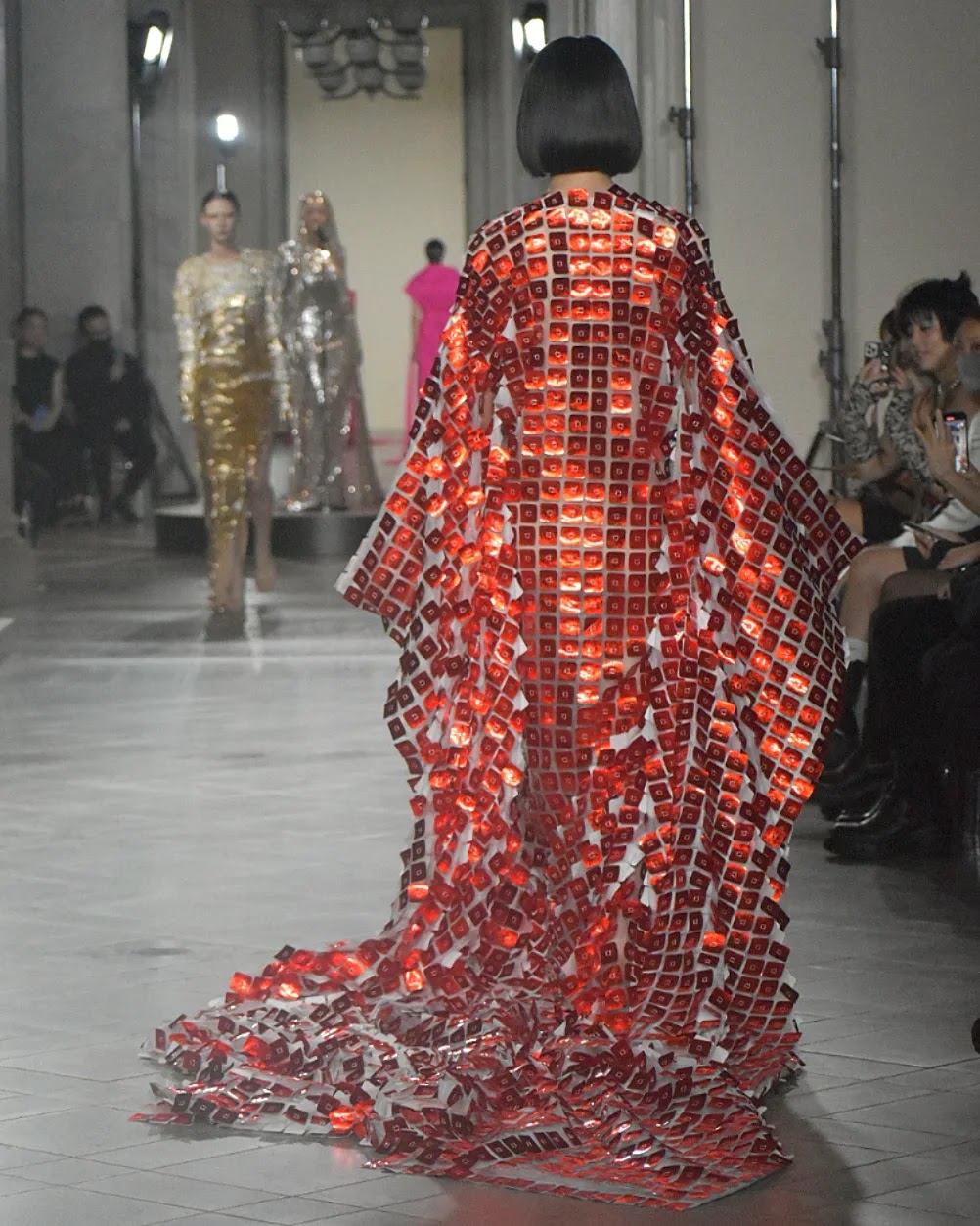
The glittering red pieces were created on the robe from LEVER COUTURE by a Ukranian designer Lessja Verlingieri, released the evening gowns through the colors of Japanese and Ukrainian flags at a historical hall, represents the cultural relationship between two countries during the time of painful in Ukraine, her homeland.

The Hyokeikan, a historical building in the Tokyo National Museum where is transformed into the runway, were illuminated by yellow and blue lights, the Ukranian flag color.

Currently, Odessa-born designer Lessja Verlingieri resides in Los Angeles and works for many renowned Hollywood stars include Lady Gaga, Megan Thee Stallion, Jennifer Lopez, Taylor Swift, Mila Jovovich and more.

In the show, "Tina Karol" , a renowned Ukrainian singer and actress start performing her new interpreted Ukrainian traditional song, to send the message of freedom, hope, love and peace to the world, one of the most stunning collections in Tokyo fashion Week this year.

Lessja Verlingieri ดีไซเนอร์ชาวยูเครน เปิดตัวชุดราตรี แบรนด์ LEVER COUTURE คอลเลคชั่นฤดูใบไม้ผลิ/ฤดูร้อน 2023 ด้วยสีธงชาติญี่ปุ่นและยูเครน ท่ามกลางบรรยากาศหรูหราในอาคารเก่าแก่กว่า 100 ปี สื่อถึงความสัมพันธ์ทางวัฒนธรรมระหว่างสองชาติในช่วงเวลาที่เต็มไปด้วยเจ็บปวดที่ประเทศยูเครน บ้านเกิดของเธอ 

เฮียวเคคัง อาคารโบราณในพิพิธภัณฑสถานแห่งชาติโตเกียว ถูกเนรมิตให้เป็นรันเวย์ ภายนอกประดับไฟสีเหลือง-น้ำเงิน สีธงชาติยูเครนนั่นเอง

ปัจจุบัน ดีไซเนอร์ได้ย้ายไปอาศัยอยู่ที่ลอสแองเจลิส และทำงานกับดาราฮอลลีวูดชื่อดังมากมาย อาทิ เลดี้กาก้า, เมกัน ธี สตัลเลียน, เจนนิเฟอร์ โลเปซ, เทย์เลอร์สวิฟท์, มิล่า โจโววิช และอีกมากมาย

ภายในงาน "ทีน่า คารอล" นักร้องและนักแสดงชื่อดังชาวยูเครนเปิดตัวด้วยบทเพลงพื้นเมืองของยูเครนที่ถูกนำมาตีความใหม่ ส่งสารแห่งอิสรภาพ ความหวัง ความรัก และสันติสุขกลับมาสู่โลก และยังเป็นอีกก้าวสำคัญของแบรนด์กับการเปิดตัวอย่างยิ่งใหญ่ในเอเชีย หลังจากทำงานร่วมกับดาราฮอลลีวูดมาฝนาน กลายเป็นหนึ่งในคอลเลกชันที่สตรองที่สุดในโตเกียวแฟชั่นวีคปีนี้เลยทีเดียว


Image: inStyle Asia


©2026 INSTYLEASIA All Rights Reserved.
Designed by Creatopia Space